




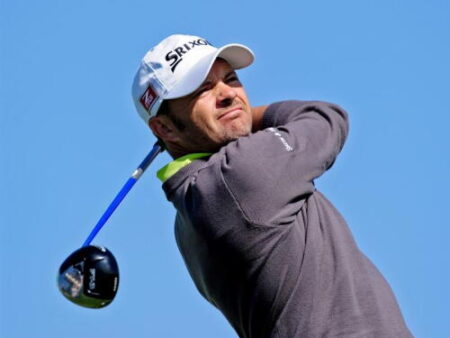
 About Andy Marshall
My background
I grew up in a place where golf was part of everyday life. A nine-iron was as familiar as a schoolbag, and weekends were measured in daylight hours on the range.
Two things pulled at me from the start: the game itself and the numbers behind it. A small change in club angle or wind speed rewrites the whole shot, and I wanted to know why. At school, that showed up as an interest in maths and strategy games.
Junior club competitions came next, then local events on weekends. My first proper coach rarely talked about talent. He talked about repetition and about measuring what you did so you could repeat it. That obsession with cause and effect came long before any thought of a career.
Life on tour
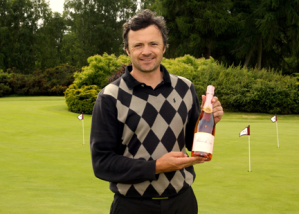
Turning professional changes the game from something you love into something you account for. Life on tour is a strange mix of routine and unpredictability. The routine is the range, the gym, the flights and the hotels, all measured out in tee times.
The unpredictability is everything else: wind, greens, a draw that sends you out at dawn. One shot on Thursday morning can rewrite your whole week. You learn fast that you control your preparation and very little else.
Across those years I worked with a number of equipment partners, among them Stuburt, Srixon and Blackmore. Alongside the touring, I ran corporate events and golf clinics. That work put me in front of amateur players rather than leaderboards. I enjoyed it as much as the competition weeks.
Australia was part of the picture too — tournaments and pro-ams, corporate days, long stretches away from home. What tour life taught me is simple enough. Discipline, working with data, managing pressure, and the constant calculation of risk against reward.
From the fairways to online gambling
Numbers and strategy in a golfer’s life
Every professional golfer lives inside a spreadsheet, whether they realise it or not. Strokes gained, driving accuracy, greens in regulation, proximity from 150 yards — all of it gets measured. Read those numbers long enough, and you see the course differently. That is where my interest in probability began.
Risk and reward — golf as a probability game
Every shot is a decision about risk and reward. Do you take the green on over water, or lay up and trust the wedge? That is applied probability, played out hundreds of times a week. The same mindset made me curious about how odds are priced.
Time in Australia and the local gambling culture
You can’t spend time in Australia without noticing how central the punt is to sport. Pokies humming away in the local RSL, TAB screens above the bar, mates arguing over the odds on a Saturday. Watching that up close is where my interest in Australian online gambling started.
The maths behind pokies and casino games
Curiosity about odds led straight into the maths behind the games. RTP, or return to player, is the share of stakes a game returns in theory over the long run. House edge is the same figure viewed from the operator’s side. Volatility describes how widely results swing around that average. Hit frequency tells you how often a pokie pays anything at all.
Licensing, offshore operators and the Aussie landscape
From there, the regulatory picture became the interesting part. Australia is unusual. Sports betting is legal domestically through licensed corporate bookmakers. Online casino games are largely served by offshore operators licensed in Malta, Curaçao, Anjouan and similar jurisdictions. Understanding the Interactive Gambling Act 2001 and the role of ACMA is what moved me from reader to writer.
Writing about online gambling
The first reviews
It started as notes to myself. Which licence does this casino actually hold? How long does a withdrawal take in practice? What do the bonus terms say once you read past the headline? The notes turned into comparisons, and eventually into published reviews and guides on Australian-facing gambling sites.
What I cover today
Today I write for Australian players across the whole picture rather than one corner of it. That means online pokies, and the RTP, volatility and providers behind them. It also means offshore casinos holding MGA, Curaçao or Anjouan licences, plus sports betting with licensed Australian bookmakers.
Crypto casinos taking Bitcoin, Ethereum and Litecoin get the same treatment. Payment methods matter here too — PayID, BPAY, Neosurf and bank transfer. So do bonuses, real wagering requirements, support quality, payout times and site security.
Independence and method
My reviews come from my own testing, not paid placements, and any affiliate relationship is disclosed. In practice, I verify the licence in the regulator’s own register. Then I deposit real money and claim the bonus to see what the wagering requirement does. I request a withdrawal and time it, and I ask for support a real question. Where a site falls short, that goes in the review.
Responsible gambling
On the golf course, you learn to walk away from a bad decision instead of chasing it. The same rule applies at the tables. Gambling is entertainment, and the moment it stops being fun it needs to stop full stop.
I’d encourage every Australian player to understand how BetStop, the National Self-Exclusion Register, works at betstop.gov.au. Set deposit limits before you start, not after. If the punt starts feeling heavier than it should, Gambling Help Online is on 1800 858 858, around the clock. Lifeline is on 13 11 14 for broader support. The legal age here is 18, and it matters.
Contact & links
Read more about my golf career on my official site: https://andy-marshall.net/
Editorial enquiries, corrections and fact-checks: [email protected]
Found an error in a review? Tell me. Corrections are dated and noted on the page.